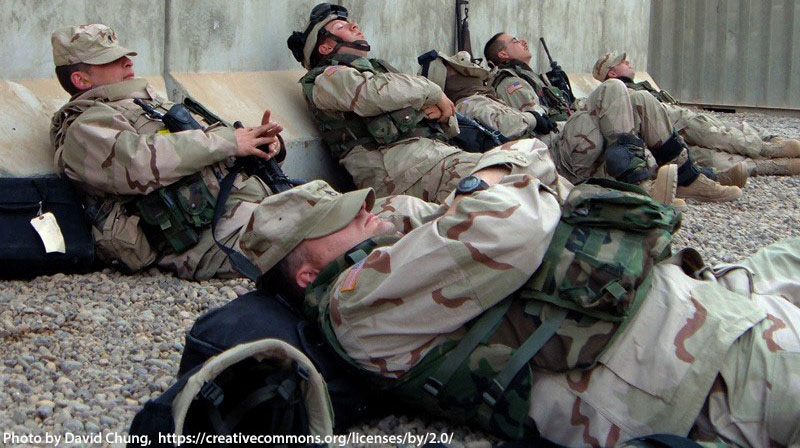
Sleep disturbances are a frequent occurrence in the general population, and particularly endemic in military populations. A gap exists between the increased need for behavioral treatments of these disturbances, widely considered the gold standard in many circumstances, and the availability of proficient behavioral clinicians trained to provide them.
The Sleep Curriculum is a distance-based, four month, 48-contact hour multi-methodological training in behavioral sleep medicine (BSM) interventions. It is designed to provide behavioral clinicians with an intermediate level of knowledge and competence in working with military-connected patients with a variety of sleep disorders including insufficient sleep, insomnia, shift work, and delayed sleep phase. At the conclusion of the course, clinicians will receive 34 APA-approved CEs and a certificate of completion documenting total hours of training. Registration for the Sleep Curriculum is $300.
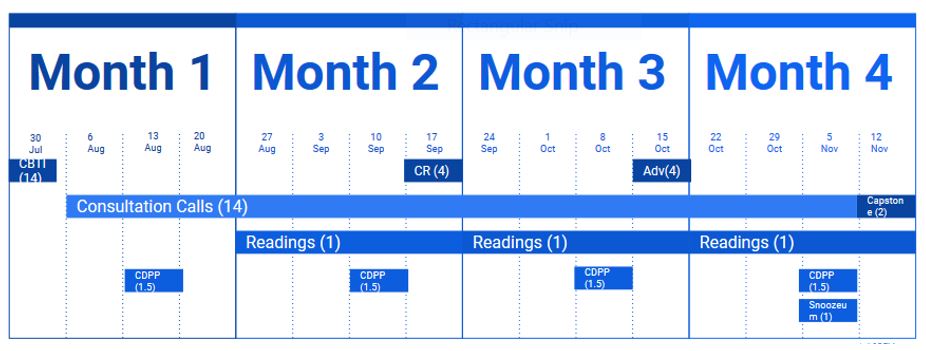
The Sleep Curriculum consists of a foundational two-day workshop on Cognitive-Behavioral Therapy for Insomnia (CBT-I) followed by approximately four months of weekly group consultation calls facilitated by a BSM subject matter expert (see faculty biographies) as clinicians begin to implement BSM interventions. Throughout consultation, additional content will be provided including self-paced webinars on current BSM topics, an immersive experience in a virtual sleep training environment, key BSM literature, and a half-day workshop each on Circadian Rhythm Sleep-Wake Disorders and advanced aspects of CBT-I. The course will conclude with a final capstone seminar, in which case presentations with a panel of leading experts in the BSM field consolidate acquired proficiency.
The Sleep Curriculum focuses on military-connected patients to include Service members and Veterans such that content is anchored in military cultural contexts and case illustrations. However, as BSM interventions are applicable in a wide range of settings and populations, it is expected that clinicians may apply knowledge and competence gained to a range of patients in their clinical practice.
Requirements:
The Sleep Curriculum functions as a cohesive course, where enrollment necessitates completion of each training/component to receive the completion certificate. Participants will need to commit to attend ALL of the scheduled training events and asynchronous content. Credit for live trainings can be achieved as they are completed, while all asynchronous content must be completed in its collective entirety to achieve CEs. Tuition for the course includes all components; reimbursement for incompletion of the program is not available. Because the Sleep Curriculum content will be provided remotely, via live online, asynchronous/self-paced online, and live telephone-based modalities in combination, clinicians are responsible for ensuring technical capability requirements for their computers are met. Clinicians will be approved via application.
Please note that CEs for the asynchronous, or self-paced, portions of the curriculum will be awarded as all-inclusive. Registrants who do not complete any component of the self-paced components of the curriculum will not be able to complete the certificate for the Sleep Curriculum.
Also note that the curriculum requires consultation follow-up with our curriculum facilitators. These consults will take place weekly, and are an integral and important part of the Sleep Curriculum. Through use of consultation, providers can:
- Obtain support to promote skills development and mastery in Curriculum topics and practices
- Master Curriculum practices more quickly
- Receive feedback on active cases
- Build confidence in the use of Curriculum practices
The Cognitive Behavioral Therapy for Insomnia workshop, held on 30-31 July 2020, is the foundation of the Curriculum. Registrants who do not complete the Cognitive Behavioral Therapy for Insomnia training will not be permitted to progress to the more advanced components of the Curriculum.
Although no previous BSM training is expected or required, applicants should demonstrate an interest in the BSM field and intent to implement skills gained from the curriculum in their clinical practice. Strong consideration will be given to clinicians who work with military-connected patients in some capacity.
Curriculum Dates and Components
The Sleep Curriculum will run from 30 July- 12 November 2020. Click on any of the components below for more information.
| Course Title | CEs | Date and Time. All Times Are EASTERN |
| 14 | 30-31 July 2020, 9 a.m.-5:30 p.m. | |
| Weekly group consultation calls | None | Once per week, August-November, Wednesday 1- 2 p.m. OR Thursday 11:30 a.m.-12:30 p.m. |
| Treatment of Circadian Rhythm Sleep Wake Disorders | 4 | 15 September, 10 a.m.-2:15 p.m. |
| Advanced Cognitive Behavioral Therapy for Insomnia | 4 | 13 October, 10 a.m.-2:15 p.m. |
| Capstone Seminar, Group Case Presentation, BSM Expert Panel | Pending | 12 November, 11 a.m.-1 p.m. |
| TOTAL CEs | 24 |
Asynchronous, or Home Study Content
| Webinar: Sleep Disorder Care in the Military | 1.5 hour recording |
| Webinar: Treatment Order in Cases of Co-Morbid PTSD and Insomnia | 1.5 hour recording |
| Webinar: Helping Patients with PTSD-Related Nightmares | 1.5 hour recording |
|
Webinar: Exploring the Relationship Between Sleep and Substance Use |
1.5 hour recording |
| 1 hour activity | |
| Approximately 3 hours | |
|
TOTAL CEs: |
10 |
Total: 48 Contact Hours / 34 CEs
Sample 4 Month Completion Timeline:
Instructors:
Instruction for the live, evidence-based therapy training events will be provided by CDP's Dr. William Brim and Dr. Diana Dolan.
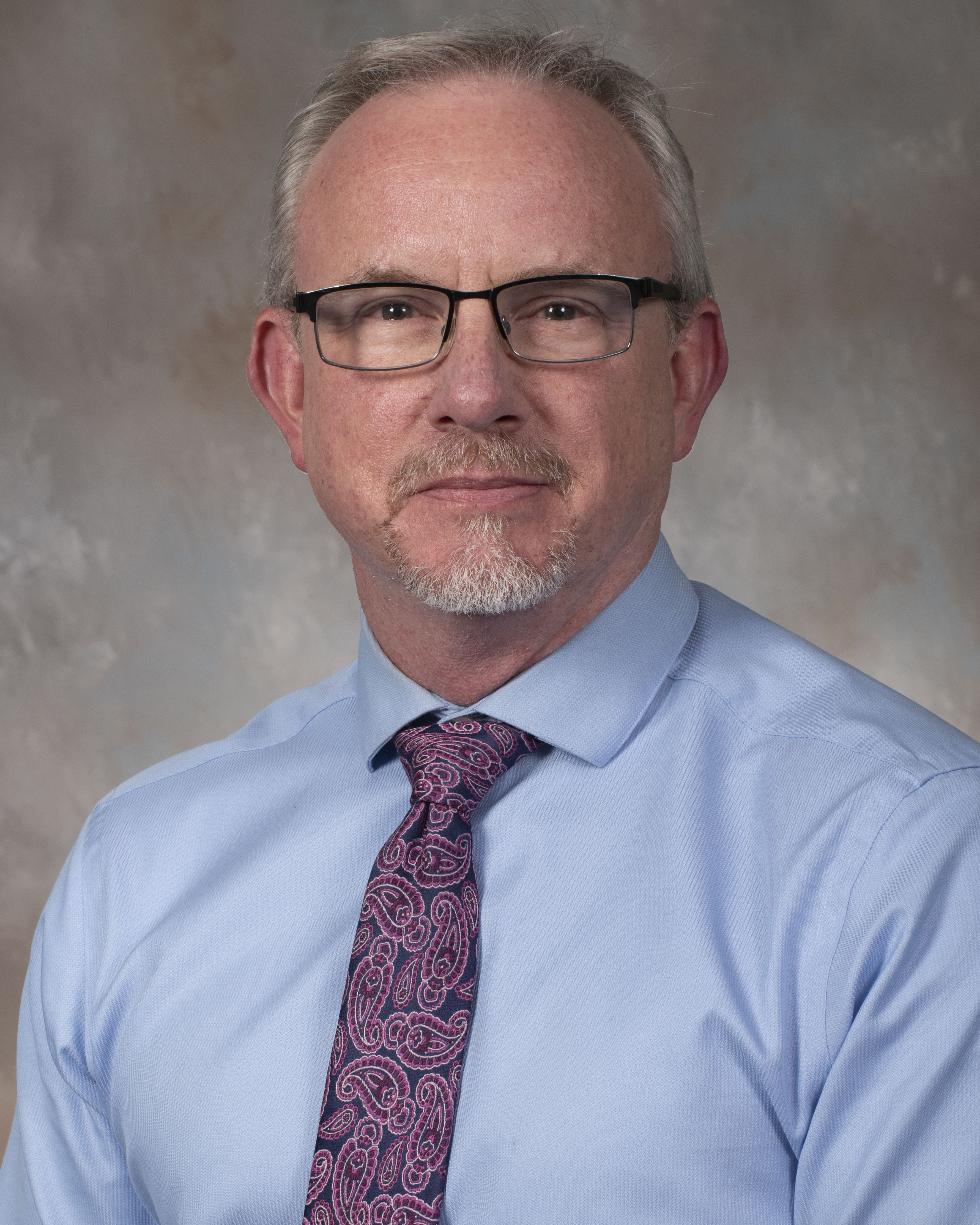 William Brim, Psy.D., is the director of the Center for Deployment Psychology (CDP) at the Uniformed Services University of the Health Sciences in Bethesda, Maryland. He joined CDP in 2007, initially as a deployment behavioral health psychologist at Malcolm Grow Medical Center and served as deputy director until 2017. Prior to joining CDP, Dr. Brim served on active duty as a psychologist in the United States Air Force from 1997 to 2007. Dr. Brim received his bachelor’s degree in psychology from the University of Tennessee and his master’s and doctorate degrees in clinical psychology from Nova Southeastern University in Fort Lauderdale, Florida. He is a graduate of the Wilford Hall Medical Center Psychology Residency Program and the Wilford Hall Clinical Health Psychology Post-Doctoral Fellowship Program.
The focus of Dr. Brim's clinical work, supervision and training is on deployment and redeployment- related mental health issues, specifically assessment and treatment of posttraumatic stress disorder and insomnia. Additionally, Dr. Brim focuses on health psychology clinical practice, the integration of mental health services in primary care and offers forensic psychology expert consultation and witness services.
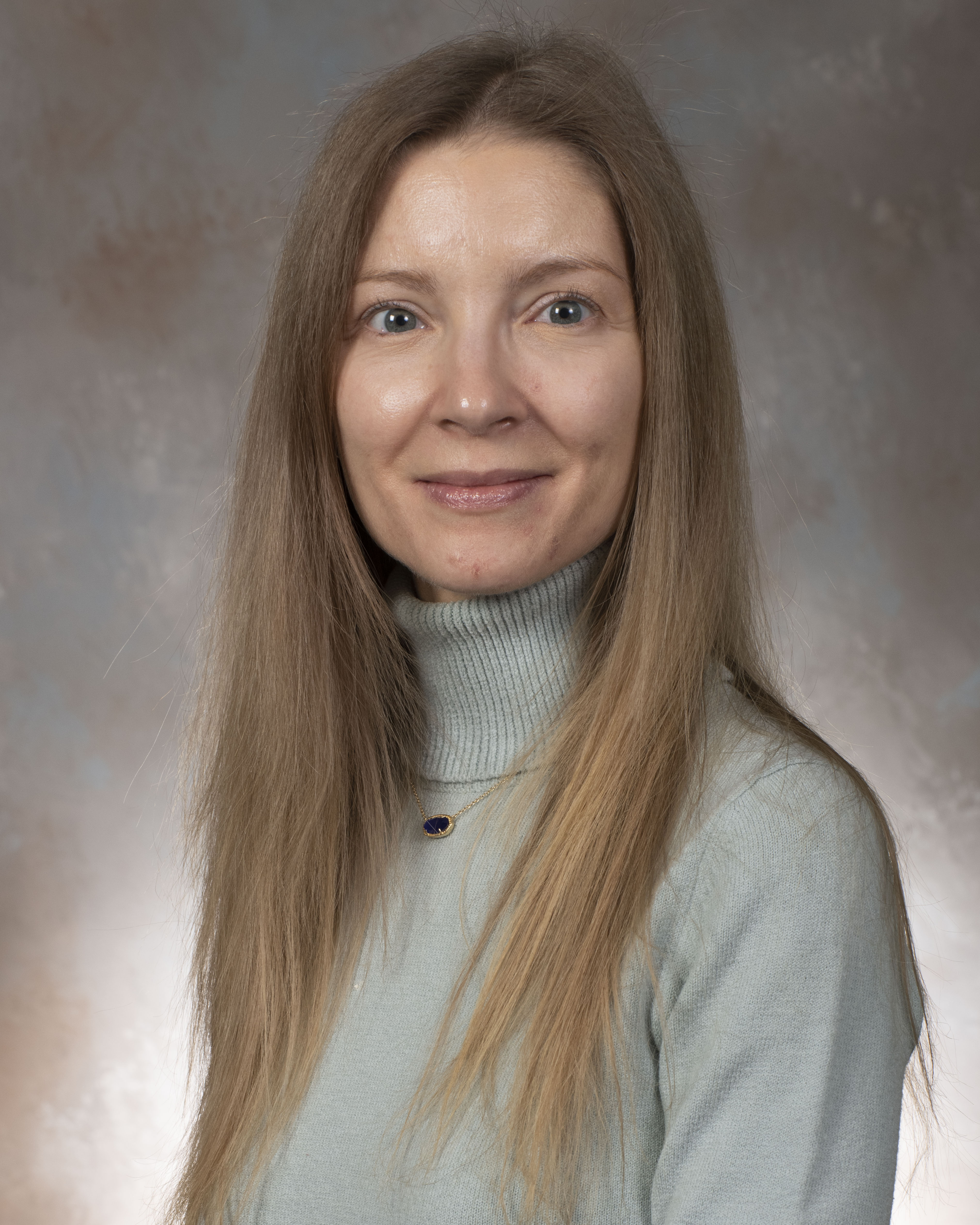 Diana C. Dolan, Ph.D., CBSM, is a clinical psychologist serving as a Senior Military Behavioral Health Psychologist with the Center for Deployment Psychology at the Uniformed Services University of the Health Sciences in Bethesda, Maryland. In this capacity, she develops and presents trainings on a variety of EBPs and deployment-related topics, and provides consultation services. Dr. Dolan graduated from the University of North Texas with a bachelor’s degree in psychology and earned her doctorate in clinical health psychology and behavioral medicine from the University of North Texas. She completed a clinical psychology internship at Wilford Hall Ambulatory Surgical Center in San Antonio, Texas. Dr. Dolan is a veteran of the U.S. Air Force. As an active duty psychologist, she served as chief, Primary Care Psychology at Lackland AFB, Texas, overseeing integrated behavioral health services in primary care. She was also responsible for overseeing the base post-deployment health reassessment program.
Prior to her current position, she was a deployment behavioral health psychologist with CDP and the associate training director for the clinical psychology internship at Wilford Hall. Dr. Dolan’s professional interests include behavioral treatment of health conditions, in particular sleep disorders and within brief-natured primary care settings, clinical psychology training and program evaluation, and military psychology. She is certified in Behavioral Sleep Medicine by the American Board of Sleep Medicine.
Please note, some of the pre-recorded webinars and other sections of the curriculum may be covered by other presenters. Please see the individual course information sheet for specifics.
Applications for the 2020 Summer iteration of the CDP Sleep Curriculum have closed. Check back for future sessions. If you have any questions, please contact Dr. Diana Dolan (diana.dolan.ctr@usuhs.edu) or Mr. Chris Adams (christopher.adams.ctr@usuhs.edu)