
Staff Perspective: Honoring the Life and Legacy of Dr. Walter E. Penk, Jr.
(22 August 1933 – 30 September 2025
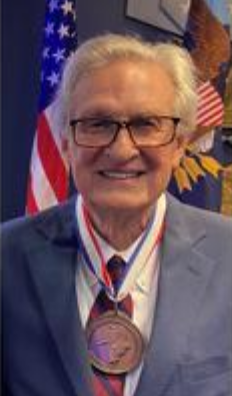 The field of psychology—and more importantly, generations of veterans and service members—lost a remarkable advocate, mentor, and innovator with the passing of Dr. Walter Erich Penk, Jr. His career spanned more than six decades, and his contributions to military and veteran psychology fundamentally reshaped how we understand, treat, and support those living with trauma and mental illness.
For those of us who had the privilege to know him personally, Dr. Penk was not only a giant in the field but also a colleague, mentor, and friend whose wisdom, humility, and kindness left lasting impressions on our lives and work.
A Life of Service
Born in 1934 in Victoria, Texas, Dr. Penk earned his degrees in Clinical Psychology from the University of Houston before beginning his career at VA Medical Centers in Houston and Dallas. Over the years, he served in leadership positions at VA hospitals in Dallas, Boston, and Bedford, as well as Director of Psychology for the Massachusetts Department of Mental Health. Later, he became Professor of Psychiatry and Behavioral Sciences at Texas A&M College of Medicine, where he continued teaching and mentoring well into his later years. Even after his retirement, Dr. Penk remained active as a consultant, researcher, and advisor, continuing to write, teach, and mentor into his 80s.
Transforming Veteran Mental Health Care
Dr. Penk’s most enduring contributions came through his pioneering work in psychosocial rehabilitation. At a time when the prevailing approach emphasized hospitalization and medication, he demonstrated that employment and education were themselves powerful therapeutic tools. His research reframed national approaches to PTSD, severe mental illness, and substance abuse by showing the curative power of purpose and productivity. He was also far ahead of his time in recognizing the role of ethnicity and culture in treatment—insights that only years later became central to mental health care.
Scholar and Leader
Dr. Penk authored or co-authored more than 180 publications, including influential works such as Returning War’s Wounded and Treating PTSD Among Military Personnel. He served on editorial boards of leading journals and held leadership roles in APA divisions dedicated to clinical, public service, and military psychology. Beyond scholarship, he developed and promoted programs in case management, self-care, family psychoeducation, supported housing, employment, and peer support that have become staples of Veteran care.
Spirit of Hope
Dr. Penk’s work embodied the values of the Department of Defense Spirit of Hope Award—duty, honor, courage, integrity, and devotion. His ideas about employment as a central part of recovery directly shaped the Transition Assistance Program, helping the 200,000 Service members who separate each year find purpose and stability. He gave generously of his time and expertise, mentoring countless psychologists, many of whom now carry his work forward in VA hospitals, military installations, universities, and community practices around the country.
Honors and Recognition
The breadth of recognition Dr. Penk received reflects the depth of his impact. His honors included the APA Presidential Citation, Distinguished Career Awards from APA and the VA, the APF Gold Medal for Life Achievement in Practice of Psychology, and the Charles S. Gersoni Award for Military Psychology. In 2017, the Texas State Senate issued a resolution honoring his lifetime contributions. Yet despite these accolades, he remained humble, always more interested in advancing others’ work than in spotlighting his own.
Mentor, Colleague, Friend
For many, the loss of Dr. Penk is deeply personal. He was a generous mentor, offering not only professional guidance but also wisdom about compassion, resilience, and integrity. He had a rare ability to make others feel valued and capable, inspiring confidence in early-career psychologists and encouraging seasoned professionals to keep growing. His legacy lives not only in his published works and programs but in the lives of those he mentored and the countless Veterans who benefited from his vision.
A Lasting Legacy
Dr. Walter E. Penk’s life reminds us that the true measure of a career lies in the lives changed along the way. His work redefined how our nation treats psychological trauma and mental illness, and his belief in the healing power of employment and education continues to shape practice today. As we honor his memory, we are called to carry his legacy forward—innovating, advocating, and mentoring, just as he did. In doing so, we ensure that his vision of purposeful, compassionate care for veterans and service members lives on.
I’ll close with Walter’s favorite catch phrase that could be found at the end of every email he sent, “There is still more work to be done.”
The opinions in CDP Staff Perspective blogs are solely those of the author and do not necessarily reflect the opinion of the Uniformed Services University of the Health Science or the Department of War.
William Brim, Psy.D., is the executive director of the Center for Deployment Psychology (CDP) at the Uniformed Services University of the Health Sciences in Bethesda, Maryland. He joined CDP in 2007, initially as a deployment behavioral health psychologist at Malcolm Grow Medical Center and served as deputy director until 2017.


(22 August 1933 – 30 September 2025
The field of psychology—and more importantly, generations of veterans and service members—lost a remarkable advocate, mentor, and innovator with the passing of Dr. Walter Erich Penk, Jr. His career spanned more than six decades, and his contributions to military and veteran psychology fundamentally reshaped how we understand, treat, and support those living with trauma and mental illness.
For those of us who had the privilege to know him personally, Dr. Penk was not only a giant in the field but also a colleague, mentor, and friend whose wisdom, humility, and kindness left lasting impressions on our lives and work.
A Life of Service
Born in 1934 in Victoria, Texas, Dr. Penk earned his degrees in Clinical Psychology from the University of Houston before beginning his career at VA Medical Centers in Houston and Dallas. Over the years, he served in leadership positions at VA hospitals in Dallas, Boston, and Bedford, as well as Director of Psychology for the Massachusetts Department of Mental Health. Later, he became Professor of Psychiatry and Behavioral Sciences at Texas A&M College of Medicine, where he continued teaching and mentoring well into his later years. Even after his retirement, Dr. Penk remained active as a consultant, researcher, and advisor, continuing to write, teach, and mentor into his 80s.
Transforming Veteran Mental Health Care
Dr. Penk’s most enduring contributions came through his pioneering work in psychosocial rehabilitation. At a time when the prevailing approach emphasized hospitalization and medication, he demonstrated that employment and education were themselves powerful therapeutic tools. His research reframed national approaches to PTSD, severe mental illness, and substance abuse by showing the curative power of purpose and productivity. He was also far ahead of his time in recognizing the role of ethnicity and culture in treatment—insights that only years later became central to mental health care.
Scholar and Leader
Dr. Penk authored or co-authored more than 180 publications, including influential works such as Returning War’s Wounded and Treating PTSD Among Military Personnel. He served on editorial boards of leading journals and held leadership roles in APA divisions dedicated to clinical, public service, and military psychology. Beyond scholarship, he developed and promoted programs in case management, self-care, family psychoeducation, supported housing, employment, and peer support that have become staples of Veteran care.
Spirit of Hope
Dr. Penk’s work embodied the values of the Department of Defense Spirit of Hope Award—duty, honor, courage, integrity, and devotion. His ideas about employment as a central part of recovery directly shaped the Transition Assistance Program, helping the 200,000 Service members who separate each year find purpose and stability. He gave generously of his time and expertise, mentoring countless psychologists, many of whom now carry his work forward in VA hospitals, military installations, universities, and community practices around the country.
Honors and Recognition
The breadth of recognition Dr. Penk received reflects the depth of his impact. His honors included the APA Presidential Citation, Distinguished Career Awards from APA and the VA, the APF Gold Medal for Life Achievement in Practice of Psychology, and the Charles S. Gersoni Award for Military Psychology. In 2017, the Texas State Senate issued a resolution honoring his lifetime contributions. Yet despite these accolades, he remained humble, always more interested in advancing others’ work than in spotlighting his own.
Mentor, Colleague, Friend
For many, the loss of Dr. Penk is deeply personal. He was a generous mentor, offering not only professional guidance but also wisdom about compassion, resilience, and integrity. He had a rare ability to make others feel valued and capable, inspiring confidence in early-career psychologists and encouraging seasoned professionals to keep growing. His legacy lives not only in his published works and programs but in the lives of those he mentored and the countless Veterans who benefited from his vision.
A Lasting Legacy
Dr. Walter E. Penk’s life reminds us that the true measure of a career lies in the lives changed along the way. His work redefined how our nation treats psychological trauma and mental illness, and his belief in the healing power of employment and education continues to shape practice today. As we honor his memory, we are called to carry his legacy forward—innovating, advocating, and mentoring, just as he did. In doing so, we ensure that his vision of purposeful, compassionate care for veterans and service members lives on.
I’ll close with Walter’s favorite catch phrase that could be found at the end of every email he sent, “There is still more work to be done.”
The opinions in CDP Staff Perspective blogs are solely those of the author and do not necessarily reflect the opinion of the Uniformed Services University of the Health Science or the Department of War.
William Brim, Psy.D., is the executive director of the Center for Deployment Psychology (CDP) at the Uniformed Services University of the Health Sciences in Bethesda, Maryland. He joined CDP in 2007, initially as a deployment behavioral health psychologist at Malcolm Grow Medical Center and served as deputy director until 2017.