
Staff Perspective: The Quiet Work of PCSing - How Rest and Connection Build Resilience In Military Families

I have served on the Military Child and Family Collaboratory, here at the Center for Deployment Psychology for almost four years now. A part of that work has been the valuable insights that I have gained from, providers, policy makers, advocates and families at our bi-annual convening events. One common theme is that our military families are often described as resilient, even as military youth face unique circumstances and navigate settings and situations marked by constant change. Hearing this theme repeated led me to look more closely at how resilience is supported and defined within military families.
Although there has not been a consensus on the definition of resilience, we can conclude that there are both individual factors and external circumstances that interplay to foster resilience (Skomorovsky & Dursun, 2022). Family resilience research emphasizes that risk and protective factors operate together and the balance of these factors influences a family's ability to be resilient (Sullivan et al., 2020). This framework also underscores how resilience can only fully be understood when providers consider the interaction between a family's stressors, strengths and access to resources (Sullivan et al., 2020).
To bring this framework to life, I want to share some reflections of a recent conversation with my cousin on what sustains her family’s resilience.
Before we get started can you please tell us a little about your family?
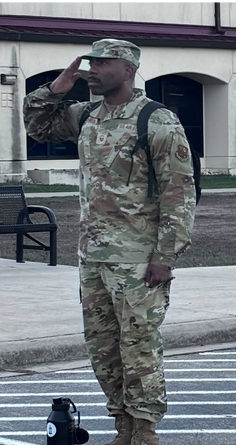
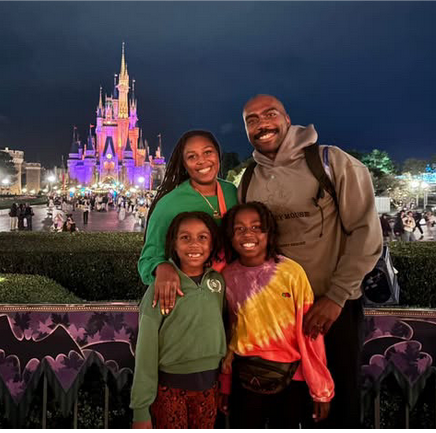 We are the Johnsons. Andrew is 39 and has served on active duty in the U.S. Air Force for 15 years, and I’m Liz, 36, his spouse. We’ve been married for 11 years and are raising two kids—Dylan, our 9-year-old soccer enthusiast, and Amaya, who is 7 and proudly claims the title of gymnastics queen, along with Jefe, our forever puppy, who is either 10 or 70 depending on how you count dog years.
Andrew and I met at his first duty station in Washington, D.C., and since then our family has completed six permanent changes of station and experienced two full deployments. Dylan has already lived through five PCS moves, Amaya four, and Jefe five, each move adding another chapter to our family’s military journey.
-When you think about the term resilience, what does it mean for you in your day-to day life and what is needed to ensure that families maintain resilience?
Definitely going with the flow and having to be okay with it. With Andrew being active duty, every so often, he’ll get his call-to-duty email and that’s when everything shifts gears with the quickness. When Andrew leaves, I try my best to keep our schedule the same or I may have to add more guidelines to our schedule. My saying for when he’s gone is “we’re all on the same team, we need to 'play' in harmony so that we can make this work”. I try to make sure the kids don’t miss out on their activities and maintain a sense of normalcy. Sometimes, I feel like I’m overcompensating to fill the absence of dad.
It sounds like flexibility is an important component of your family’s ability to maintain resilience. I know your family recently PCS’d. Can you tell us a little about that? How has military life such as deployments, trainings, frequent moves, or changes in routine impacted your family’s sense of connection, adaptability or staying steady during change and what helps your family stay cohesive during these transitions?
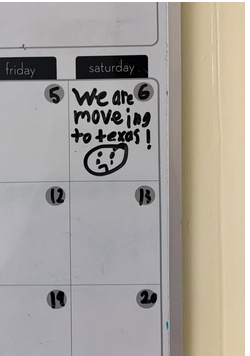 PSC-ing is very hard. This particular PSC came with a lot of anxiety for me and sadness for the kids. Andrew and I have open conversations about the upcoming PCS so we can prepare the kids and ourselves. I would schedule more playdates or try to squeeze in that last family vacation to make the idea of leaving less dreadful. We lived overseas and loved every minute of it. Living in Okinawa, I felt safe. My children got to be children (go outside and play without me standing feet away from them, walk alone, not have to worry about active shooters or even having to participate in the drills). I was able to let my guard down and feel human. Once we got the news we were coming back, I started to become stressed, stressed about money, the political climate and not having a job. For the kids, now that they’re older, they’ve expressed sadness because of them having to their friends, schools and teams.
We are a very tight knit family, Dylan and Amaya are each others best friends, they play extremely well together. I’ve had to have a lot of heart-to-hearts with them and remind them that they are always going to be there for each other no matter what. It’s funny to see how they are so different when they interact with their friends. Dylan is more reserved and will have maybe 1 or 2 solid buddies and then there Amaya, she had everyone and their family as a friend. Watching them say goodbye to their friends was hard for me. Amaya and her “besties” cried the whole day and hugged. Dylan gives a quick high-five and a “bye guys” and goes on about his business. Once we landed in the U.S. I saw the excitement and the calmness leave him and he became very sad for a few days. It took him a while to say the words “I’m sad” “I miss my life in Okinawa” “I want to go back”.
Because we PCS-ed during the holiday and the kids weren’t enrolled in school, our schedules were all out of whack, going to bed late, eating out, sleeping in. We talked about how this Christmas didn’t feel like Christmas. Typically right after Thanksgiving, we’re gearing up for Christmas, this year we were gearing up for a move. Dylan reminded me that this year we did not have our traditional movie nights or hot chocolate dance parties. Hearing that made me extremely sad because I am “Mother Christmas" and I feel like as a mom, it’s my duty to help create these traditions and memories.
It’s clear that a move can bring on both excitement and stress, can you share what helps your family maintain stability and a sense of belongingness?
I try my hardest to keep connections with our family members, cousins and friends to maintain normalcy and consistency for the kids. Thank God for technology, the kids have been able to chat or Facetime their friends and family whenever they want. I try to show them that they don’t have to forget anyone just because we aren’t physically close to them.
What supports, resources, or change within schools, health care, or military systems would support greater resiliency for you and your family?
 The process of transferring schools might have be the most nerve wracking for me. During our most recent move, the school we were transferring to needed all of these reports and forms that the kids' current school was not able to give to us until the semester finished, which was bringing us too close for comfort. Having the kids transition right into school was a big goal for me, so that they didn’t have such a big break in their routine, but in true PCS fashion, things just didn’t go as planned. I wish the military would allow/pay for one family member to travel with us during a PCS. This would take a lot off of our minds when we are trying to do our last minute packing or bag check ins. This time around, when we arrived in San Antonio, we had eight large totes, three big suitcases two kids and one dog with a very large travel crate. Having to wrangle everything up, and not have it in the way of the other travelers and keep the kids put, was very hard, especially when we had to walk the entire airport to go to retrieve a rental. Thank God I ran into a longtime friend in the baggage claim, he was willing to sit with our bags and the kids while we got our rental. If we had someone already there with us, we would have gotten out of that airport a lot quicker. Another option might be to have a sponsor ready and waiting for us with a large vehicle to pick us up from the airport and drive us to the hotel. In Okinawa, we drive on the opposite side of the road and car. Coming back and having to immediately remembering how to drive in a state where the minimum speed limit is 80 MPH and it was night (I don’t do well with night driving) was scary. I was terrified, and I kept it 100% honest with my kids, mom was scared. So we drove in silence to help me concentrate. We have a good laugh about it now, but if we could have something like a shuttle service, that would alleviate a lot of stress and added anxiety.
Why are periods of rest or stability important for your family’s resilience?
This PCS we had a longer period of rest because of the holidays, which for the kids was great, for me, I was burnt out with “Mommmmmm” “Can you charge my ipad?” “Where’s my chargerrrrrr?” “Can I have a snaaaackkkk?”. I think by 12/31 the kids were ready to go back to school and I definitely started that countdown lol. I do, however, like having those moments of rest because it gives us an opportunity to sit with our feelings, good or bad and recalibrate.
Military families and youth experience various risk factors that contribute to challenges, including deployments, reintegration following deployment and frequent moves but their outcomes are shaped not only by these challenges (Sullian et al., 2020). Protective factors like family cohesion, access to resources and support and connection to community serve as a buffer against negative outcomes and contribute to resilience (Sullian et al., 2020).
These experiences of the Johnson family show the work of resilience emerges through the steady and often forgotten moments of connection, flexibility and rest. Sustaining families means not only acknowledging the demands of military life but fostering an environment that promotes coordinated systems of support and opportunities for families to connect, rest and reset.
The opinions in CDP Staff Perspective blogs are solely those of the author and do not necessarily reflect the opinion of the Uniformed Services University of the Health Science or the Department of Defense.
Khristine Heflin, MSW, LCSW-C, LCSW, LICSW, is a licensed Clinical Social Worker and has been practicing since 2006. Currently, she serves as a Military Child Social Worker with the Center for Deployment Psychology (CDP) at the Uniformed Services University of the Health Sciences located in Bethesda, MD.
References:
Skomorovsky, A., & Dursun, S. (2022). Introduction: Resilience in military families. Military Behavioral Health, 10(2), 71–73. https://doi.org/10.1080/21635781.2022.2098886
Sullivan, K. S., Hawkins, S. A., Gilreath, T. D., & Castro, C. A. (2021). Mental health outcomes associated with risk and resilience among military-connected youth. Family Process, 60(2), 507–522. https://doi.org/10.1111/famp.12596


I have served on the Military Child and Family Collaboratory, here at the Center for Deployment Psychology for almost four years now. A part of that work has been the valuable insights that I have gained from, providers, policy makers, advocates and families at our bi-annual convening events. One common theme is that our military families are often described as resilient, even as military youth face unique circumstances and navigate settings and situations marked by constant change. Hearing this theme repeated led me to look more closely at how resilience is supported and defined within military families.
Although there has not been a consensus on the definition of resilience, we can conclude that there are both individual factors and external circumstances that interplay to foster resilience (Skomorovsky & Dursun, 2022). Family resilience research emphasizes that risk and protective factors operate together and the balance of these factors influences a family's ability to be resilient (Sullivan et al., 2020). This framework also underscores how resilience can only fully be understood when providers consider the interaction between a family's stressors, strengths and access to resources (Sullivan et al., 2020).
To bring this framework to life, I want to share some reflections of a recent conversation with my cousin on what sustains her family’s resilience.
Before we get started can you please tell us a little about your family? We are the Johnsons. Andrew is 39 and has served on active duty in the U.S. Air Force for 15 years, and I’m Liz, 36, his spouse. We’ve been married for 11 years and are raising two kids—Dylan, our 9-year-old soccer enthusiast, and Amaya, who is 7 and proudly claims the title of gymnastics queen, along with Jefe, our forever puppy, who is either 10 or 70 depending on how you count dog years.
Andrew and I met at his first duty station in Washington, D.C., and since then our family has completed six permanent changes of station and experienced two full deployments. Dylan has already lived through five PCS moves, Amaya four, and Jefe five, each move adding another chapter to our family’s military journey.
-When you think about the term resilience, what does it mean for you in your day-to day life and what is needed to ensure that families maintain resilience?
Definitely going with the flow and having to be okay with it. With Andrew being active duty, every so often, he’ll get his call-to-duty email and that’s when everything shifts gears with the quickness. When Andrew leaves, I try my best to keep our schedule the same or I may have to add more guidelines to our schedule. My saying for when he’s gone is “we’re all on the same team, we need to 'play' in harmony so that we can make this work”. I try to make sure the kids don’t miss out on their activities and maintain a sense of normalcy. Sometimes, I feel like I’m overcompensating to fill the absence of dad.
It sounds like flexibility is an important component of your family’s ability to maintain resilience. I know your family recently PCS’d. Can you tell us a little about that? How has military life such as deployments, trainings, frequent moves, or changes in routine impacted your family’s sense of connection, adaptability or staying steady during change and what helps your family stay cohesive during these transitions?PSC-ing is very hard. This particular PSC came with a lot of anxiety for me and sadness for the kids. Andrew and I have open conversations about the upcoming PCS so we can prepare the kids and ourselves. I would schedule more playdates or try to squeeze in that last family vacation to make the idea of leaving less dreadful. We lived overseas and loved every minute of it. Living in Okinawa, I felt safe. My children got to be children (go outside and play without me standing feet away from them, walk alone, not have to worry about active shooters or even having to participate in the drills). I was able to let my guard down and feel human. Once we got the news we were coming back, I started to become stressed, stressed about money, the political climate and not having a job. For the kids, now that they’re older, they’ve expressed sadness because of them having to their friends, schools and teams.
We are a very tight knit family, Dylan and Amaya are each others best friends, they play extremely well together. I’ve had to have a lot of heart-to-hearts with them and remind them that they are always going to be there for each other no matter what. It’s funny to see how they are so different when they interact with their friends. Dylan is more reserved and will have maybe 1 or 2 solid buddies and then there Amaya, she had everyone and their family as a friend. Watching them say goodbye to their friends was hard for me. Amaya and her “besties” cried the whole day and hugged. Dylan gives a quick high-five and a “bye guys” and goes on about his business. Once we landed in the U.S. I saw the excitement and the calmness leave him and he became very sad for a few days. It took him a while to say the words “I’m sad” “I miss my life in Okinawa” “I want to go back”.
Because we PCS-ed during the holiday and the kids weren’t enrolled in school, our schedules were all out of whack, going to bed late, eating out, sleeping in. We talked about how this Christmas didn’t feel like Christmas. Typically right after Thanksgiving, we’re gearing up for Christmas, this year we were gearing up for a move. Dylan reminded me that this year we did not have our traditional movie nights or hot chocolate dance parties. Hearing that made me extremely sad because I am “Mother Christmas" and I feel like as a mom, it’s my duty to help create these traditions and memories.
It’s clear that a move can bring on both excitement and stress, can you share what helps your family maintain stability and a sense of belongingness?
I try my hardest to keep connections with our family members, cousins and friends to maintain normalcy and consistency for the kids. Thank God for technology, the kids have been able to chat or Facetime their friends and family whenever they want. I try to show them that they don’t have to forget anyone just because we aren’t physically close to them.
What supports, resources, or change within schools, health care, or military systems would support greater resiliency for you and your family?The process of transferring schools might have be the most nerve wracking for me. During our most recent move, the school we were transferring to needed all of these reports and forms that the kids' current school was not able to give to us until the semester finished, which was bringing us too close for comfort. Having the kids transition right into school was a big goal for me, so that they didn’t have such a big break in their routine, but in true PCS fashion, things just didn’t go as planned. I wish the military would allow/pay for one family member to travel with us during a PCS. This would take a lot off of our minds when we are trying to do our last minute packing or bag check ins. This time around, when we arrived in San Antonio, we had eight large totes, three big suitcases two kids and one dog with a very large travel crate. Having to wrangle everything up, and not have it in the way of the other travelers and keep the kids put, was very hard, especially when we had to walk the entire airport to go to retrieve a rental. Thank God I ran into a longtime friend in the baggage claim, he was willing to sit with our bags and the kids while we got our rental. If we had someone already there with us, we would have gotten out of that airport a lot quicker. Another option might be to have a sponsor ready and waiting for us with a large vehicle to pick us up from the airport and drive us to the hotel. In Okinawa, we drive on the opposite side of the road and car. Coming back and having to immediately remembering how to drive in a state where the minimum speed limit is 80 MPH and it was night (I don’t do well with night driving) was scary. I was terrified, and I kept it 100% honest with my kids, mom was scared. So we drove in silence to help me concentrate. We have a good laugh about it now, but if we could have something like a shuttle service, that would alleviate a lot of stress and added anxiety.
Why are periods of rest or stability important for your family’s resilience?
This PCS we had a longer period of rest because of the holidays, which for the kids was great, for me, I was burnt out with “Mommmmmm” “Can you charge my ipad?” “Where’s my chargerrrrrr?” “Can I have a snaaaackkkk?”. I think by 12/31 the kids were ready to go back to school and I definitely started that countdown lol. I do, however, like having those moments of rest because it gives us an opportunity to sit with our feelings, good or bad and recalibrate.
Military families and youth experience various risk factors that contribute to challenges, including deployments, reintegration following deployment and frequent moves but their outcomes are shaped not only by these challenges (Sullian et al., 2020). Protective factors like family cohesion, access to resources and support and connection to community serve as a buffer against negative outcomes and contribute to resilience (Sullian et al., 2020).
These experiences of the Johnson family show the work of resilience emerges through the steady and often forgotten moments of connection, flexibility and rest. Sustaining families means not only acknowledging the demands of military life but fostering an environment that promotes coordinated systems of support and opportunities for families to connect, rest and reset.
The opinions in CDP Staff Perspective blogs are solely those of the author and do not necessarily reflect the opinion of the Uniformed Services University of the Health Science or the Department of Defense.
Khristine Heflin, MSW, LCSW-C, LCSW, LICSW, is a licensed Clinical Social Worker and has been practicing since 2006. Currently, she serves as a Military Child Social Worker with the Center for Deployment Psychology (CDP) at the Uniformed Services University of the Health Sciences located in Bethesda, MD.
References:
Skomorovsky, A., & Dursun, S. (2022). Introduction: Resilience in military families. Military Behavioral Health, 10(2), 71–73. https://doi.org/10.1080/21635781.2022.2098886
Sullivan, K. S., Hawkins, S. A., Gilreath, T. D., & Castro, C. A. (2021). Mental health outcomes associated with risk and resilience among military-connected youth. Family Process, 60(2), 507–522. https://doi.org/10.1111/famp.12596