
Staff Perspective: Imposter vs. God Complex - What Does “Professional Confidence” Actually Mean?
Lately, I have found myself speaking a lot with new professionals in our field, all of whom had anxiety about not knowing what to do and experiencing big-time imposter syndrome. It has made me reminisce about my own beginnings and the anxiety I felt being new, looking forward to the day I would feel confident with my cases. I hate to tell all of you new professionals this, but the idea that professional confidence is knowing exactly what to do all the time is an absolute myth.
What is professional confidence made of? How do you get it? Is it knowing how to treat each patient you encounter, or is it something else? The belief that at some point during your training or early years you will suddenly know exactly what you are doing is seriously unhelpful pressure. This idea inevitably causes panic when people realize that they still don’t know what to do with different patients. “I don’t know what I’m doing!” “I’m an imposter!” You can insert any similar statement here and they all ultimately do the same thing – kill our professional self-esteem and confidence. How can you be professionally confident if you don’t “know what you are doing”? How can you develop confidence otherwise? To answer these questions we have to explore what professional confidence really involves.
Is professional confidence achieved by making sure you do treatments “by the book” so you are following an evidence-based path? That does result in you being confident in the evidence base behind the treatment. However, I cannot honestly think of the last time I had an evidence-based treatment go perfectly and without my having to figure out how to adapt it in some way to make it work for the more unusual cases I tend to get. We also know that even when we can follow a specific protocol with absolute fidelity, we still don’t know what the patient will do – if they too will be absolutely faithful to it, how they will apply the learned skills, or what their end results will be.
Does professional confidence mean having lots of different treatment protocols in your toolkit that you can select from? That way, you have something to pull out at the appropriate time. That is part of it, but not all. Variety in your training and the treatment protocols you know does mean you are more likely to have something to apply to your patient. You still have to figure out how to shape that protocol to fit the person sitting in front of you, and that is where things can get dicey. Flexibility in therapy is crucial to meet our patients’ needs. This is where the artwork comes in, and there isn’t a manual for that.
If you can’t know how to treat everything, can you be professionally confident if you simply focus on a specialty area, meaning you only take specific patients and can apply the same tools? This would mean that you become more expert with those treatments and how to apply them to fit your patient’s needs. People who specialize are absolutely more expert in their concentration area than people who remain generalists. But even specialists find many times when they don’t know what to do with a specific case. Does this mean they simply aren’t expert enough yet, and if they continue their study they will gain this confidence? Probably not, because there will always be times when their expertise doesn’t perfectly fit with the presenting patient.
I worked daily with behavioral health interns for many years and continue to work with them intermittently to this day. What I have observed is that for most new professionals, they think being professionally confident means one of the things I’ve already mentioned – being skilled enough treating patients that you know how to treat whatever case presents itself. “I know what I’m doing” equates to knowing a specific treatment plan and knowing you can follow through with it successfully by the time the patient leaves their first appointment. They feel that admitting to not knowing what to do with a patient is some kind of failure as a professional.
In my humble opinion, the bottom line is this: the day you know exactly what you are doing, you need to get out of the profession because you then have a god complex. Feeling confident in this field isn’t always knowing what to do. It is knowing you can figure it out. And that doesn’t have to be in a single session. Do you know the basics – how to check for safety, explain limits of confidentiality, and get enough background information to have a good idea of the presenting problem and the start of a case conceptualization? Are you able to be an active and empathic listener, establish rapport, and ensure the patient feels heard by you? In other words, can you do the very basics that go into every encounter? If the answers are “yes” to these, then I think you indeed know what you are doing overall.
As for knowing the various treatment protocols to address different diagnostic issues, those are things we can consult about, read up on, and get further training for. There will always be times when I am at the end of a session and have no clue what to do next. But I can assure my patient we will figure it out together to get them on the path toward recovery, whatever that might look like for them. That is what professional confidence looks like. I’m not a god. I don’t know everything and I never will, especially when it comes to the immense variety in our patients. There will always be cases that challenge me and treatments I’m not yet sure about. That is what keeps me striving as a professional – not knowing it all, but having the confidence I can learn more and figure it out.
The opinions in CDP Staff Perspective blogs are solely those of the author and do not necessarily reflect the opinion of the Uniformed Services University of the Health Science or the Department of Defense.
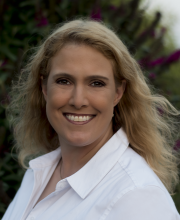
Debra Nofziger, Psy.D., is a Senior Military Behavioral Health Psychologist and certified Cognitive Processing Therapy Trainer with the Center for Deployment Psychology (CDP) at the Uniformed Services University of the Health Sciences in Bethesda, Maryland.


Lately, I have found myself speaking a lot with new professionals in our field, all of whom had anxiety about not knowing what to do and experiencing big-time imposter syndrome. It has made me reminisce about my own beginnings and the anxiety I felt being new, looking forward to the day I would feel confident with my cases. I hate to tell all of you new professionals this, but the idea that professional confidence is knowing exactly what to do all the time is an absolute myth.
What is professional confidence made of? How do you get it? Is it knowing how to treat each patient you encounter, or is it something else? The belief that at some point during your training or early years you will suddenly know exactly what you are doing is seriously unhelpful pressure. This idea inevitably causes panic when people realize that they still don’t know what to do with different patients. “I don’t know what I’m doing!” “I’m an imposter!” You can insert any similar statement here and they all ultimately do the same thing – kill our professional self-esteem and confidence. How can you be professionally confident if you don’t “know what you are doing”? How can you develop confidence otherwise? To answer these questions we have to explore what professional confidence really involves.
Is professional confidence achieved by making sure you do treatments “by the book” so you are following an evidence-based path? That does result in you being confident in the evidence base behind the treatment. However, I cannot honestly think of the last time I had an evidence-based treatment go perfectly and without my having to figure out how to adapt it in some way to make it work for the more unusual cases I tend to get. We also know that even when we can follow a specific protocol with absolute fidelity, we still don’t know what the patient will do – if they too will be absolutely faithful to it, how they will apply the learned skills, or what their end results will be.
Does professional confidence mean having lots of different treatment protocols in your toolkit that you can select from? That way, you have something to pull out at the appropriate time. That is part of it, but not all. Variety in your training and the treatment protocols you know does mean you are more likely to have something to apply to your patient. You still have to figure out how to shape that protocol to fit the person sitting in front of you, and that is where things can get dicey. Flexibility in therapy is crucial to meet our patients’ needs. This is where the artwork comes in, and there isn’t a manual for that.
If you can’t know how to treat everything, can you be professionally confident if you simply focus on a specialty area, meaning you only take specific patients and can apply the same tools? This would mean that you become more expert with those treatments and how to apply them to fit your patient’s needs. People who specialize are absolutely more expert in their concentration area than people who remain generalists. But even specialists find many times when they don’t know what to do with a specific case. Does this mean they simply aren’t expert enough yet, and if they continue their study they will gain this confidence? Probably not, because there will always be times when their expertise doesn’t perfectly fit with the presenting patient.
I worked daily with behavioral health interns for many years and continue to work with them intermittently to this day. What I have observed is that for most new professionals, they think being professionally confident means one of the things I’ve already mentioned – being skilled enough treating patients that you know how to treat whatever case presents itself. “I know what I’m doing” equates to knowing a specific treatment plan and knowing you can follow through with it successfully by the time the patient leaves their first appointment. They feel that admitting to not knowing what to do with a patient is some kind of failure as a professional.
In my humble opinion, the bottom line is this: the day you know exactly what you are doing, you need to get out of the profession because you then have a god complex. Feeling confident in this field isn’t always knowing what to do. It is knowing you can figure it out. And that doesn’t have to be in a single session. Do you know the basics – how to check for safety, explain limits of confidentiality, and get enough background information to have a good idea of the presenting problem and the start of a case conceptualization? Are you able to be an active and empathic listener, establish rapport, and ensure the patient feels heard by you? In other words, can you do the very basics that go into every encounter? If the answers are “yes” to these, then I think you indeed know what you are doing overall.
As for knowing the various treatment protocols to address different diagnostic issues, those are things we can consult about, read up on, and get further training for. There will always be times when I am at the end of a session and have no clue what to do next. But I can assure my patient we will figure it out together to get them on the path toward recovery, whatever that might look like for them. That is what professional confidence looks like. I’m not a god. I don’t know everything and I never will, especially when it comes to the immense variety in our patients. There will always be cases that challenge me and treatments I’m not yet sure about. That is what keeps me striving as a professional – not knowing it all, but having the confidence I can learn more and figure it out.
The opinions in CDP Staff Perspective blogs are solely those of the author and do not necessarily reflect the opinion of the Uniformed Services University of the Health Science or the Department of Defense.
Debra Nofziger, Psy.D., is a Senior Military Behavioral Health Psychologist and certified Cognitive Processing Therapy Trainer with the Center for Deployment Psychology (CDP) at the Uniformed Services University of the Health Sciences in Bethesda, Maryland.